
Driving Gigafactory Energy Efficiency Through Smarter Dry Room Design
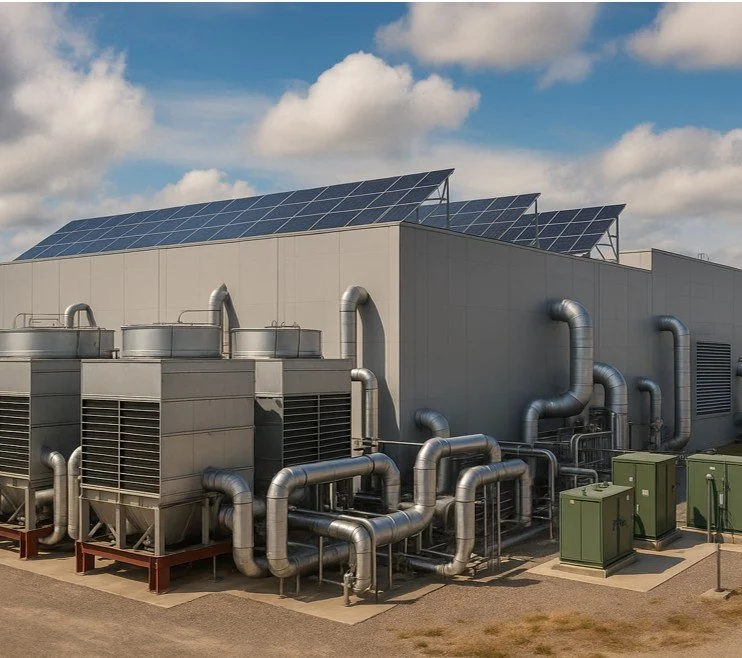
As global electrification accelerates, gigafactories are scaling at unprecedented speed—and so are their energy requirements. With facilities often consuming 30–50 kWh of electricity for every 1 kWh of battery output, energy use is now one of the largest cost drivers in modern battery manufacturing. For a 3–5 GWh factory, monthly electric bills frequently exceed $1.1–$1.8 million.
A significant portion of this demand comes from the dry room—one of the most critical and energy-intensive environments in the entire facility. At Airtho, we specialize in designing and delivering energy-efficient dry rooms and integrated modular systems that reduce both upfront costs and long-term operating expenses, helping manufacturers build smarter, faster, and more sustainably.
Where Gigafactory Energy Use Comes From
For most facilities, the largest share of energy consumption comes from production equipment and controlled environments.
Process equipment accounts for ~58% of total usage
Dry rooms account for ~32%
Within the dry room, the DHU (desiccant dehumidification unit) and chiller alone represent 61% of the load
This makes the dry room one of the most strategic places to improve gigafactory energy efficiency.
Even small improvements in airflow, moisture removal efficiency, and system integration can translate into millions of dollars in annual savings.
Reducing CAPEX With Energy-Efficient Design
Energy efficiency begins long before equipment is turned on. Through engineering-led design and modular integration, Airtho helps battery manufacturers reduce capital expenditures while improving performance.
Right-Sized Mechanical Systems
Oversizing is one of the most common and costly design pitfalls in gigafactory HVAC and dry room systems. Using detailed energy modeling, we size HVAC, DHUs, and filtration systems based on real process requirements, not inflated assumptions.

Example:
Reducing airflow from 45 ACH to 30 ACH can eliminate 562,500 CFM, saving roughly $1.85 million in capital cost.
Integrating MEP for a Leaner Facility
Airtho’s modular, pre-engineered systems consolidate mechanical, electrical, and plumbing into a streamlined package. This reduces component redundancy and lowers overall equipment count—an immediate reduction in CAPEX.
Best-Practice DHU Configurations
Studies show that properly aligned DHU sizing and HEPA filtration strategies reduce capital investment dramatically. Less equipment. Smaller equipment. Better performance.
This is what efficient engineering looks like.
Lowering OPEX With High-Performance Dry Room Systems
After startup, operating costs become the largest financial burden for gigafactories. Optimizing dry room energy use is one of the most reliable ways to achieve long-term savings.
Efficiency Gains From Smarter Dehumidification & Cooling:
High-efficiency DHUs, heat recovery, and right-sized cooling systems reduce electrical load at every stage. Large-scale studies show up to 30% reductions in facility energy use by adopting optimized dry-room designs.
Reducing Fan and Airflow Loads:
Airflow is one of the most expensive contributors to dry room energy consumption. By matching ACH to actual process needs, facilities cut fan power requirements—and their utility bills—significantly.
Managing Peak Demand:
Demand charges make up a substantial portion of monthly costs. Airtho’s approach to system staging, energy storage integration, and demand-based control strategies helps plants operate more smoothly while avoiding unnecessary spikes.
Example OPEX Savings:
Reducing airflow from 45 ACH to 30 ACH saves $550,000+ per year
Selecting an efficient DHU design can reduce consumption by hundreds of thousands annually
Energy efficiency, when designed into the system from day one, becomes a permanent advantage.
Incentives, Credits & the Broader Value of Efficiency
Energy-efficient gigafactory design doesn’t just reduce utility bills—it opens the door to multiple external benefits:
Federal and state incentives for high-efficiency mechanical systems
Utility rebates for DHUs, HVAC, controls, and heat recovery
Renewable energy integration that generates credits or tax benefits
Sensitivity gains: Just 2¢ per kWh difference saves nearly $5 million annually at a 5 GWh facility
In an industry increasingly focused on ESG, carbon reduction, and responsible manufacturing, efficient dry room engineering is no longer optional—it’s foundational.
Building a Culture of Energy Efficiency
The long-term cultural value of making efficiency a core principle within the organization:
Encourages innovation across engineering and process teams
Advances modularity and scalability
Strengthens morale and retention through craftsmanship and precision
Positions companies as sustainability leaders
Builds resilience against energy-market variability
Energy efficiency isn’t just a design choice—it’s a mindset that delivers long-term strategic advantage.
Metrics That Matter for Battery Manufacturing Energy Performance
Airtho helps manufacturers track the metrics that drive real improvement in gigafactory energy efficiency:
Whole-Facility Metrics
Total Energy Use Intensity (EUI)
kWh per manufactured cell/pack
Benchmarking against best-in-class facilities
Dry Room-Specific Metrics
Moisture Removal Efficiency: lbs of water removed per kWh
Dry Room EUI: kWh per square foot
Filter and coil performance over time
Better data leads to better decisions—and better performance.
Optimizing Equipment and Operations Over Time
Dry rooms require four categories of “work”:

Optimizing each category allows for measurable improvements in both performance and operating cost.
Choosing the Right Equipment
The difference between an efficient system and an average one is often measured in millions.
For example, the presentation compares two HEPA filtration options:
Airtho solution: 3.1 million kWh/year
Alternate option: 5.8 million kWh/year
That equates to ~$226,000 in annual savings—from a single selection.
Operational Best Practices
Minimize unnecessary exhaust
Maintain clean filters and heat exchange coils
Use energy storage or controls to avoid demand peaks
Take advantage of setback modes during non-production hours
These practical steps make energy efficiency a daily operational reality, not just a design concept.
Future Pathways to Even Greater Energy Savings
Emerging technologies will continue reshaping dry room energy use and battery manufacturing efficiency. Key opportunities include:
Isolation and localization of environmental zones
Advanced setback modes tied to production status
Dry-coating systems that drastically reduce solvent handling and drying loads
As gigafactories evolve, so will the strategies that keep them efficient, resilient, and competitive.
Key Takeaways for Gigafactory Leaders
Dry rooms and process equipment are the largest drivers of CAPEX and OPEX in battery manufacturing.
Energy-efficient engineering reduces cost at every stage—from design to procurement to daily operation.
Efficient gigafactories are more sustainable, more resilient, and more profitable.
The fastest, most effective path to energy savings begins with smart dry room design, integrated modular systems, and high-performance environmental control.
At Airtho, we help battery manufacturers accelerate timelines, reduce cost, and unlock industry-leading energy performance through integrated, modular dry room solutions.