Case Study:
Energy Storage Systems Dry Room
Size: 20,000 ft²
Location: Detroit, MI
Timeline: 7 months
Overview
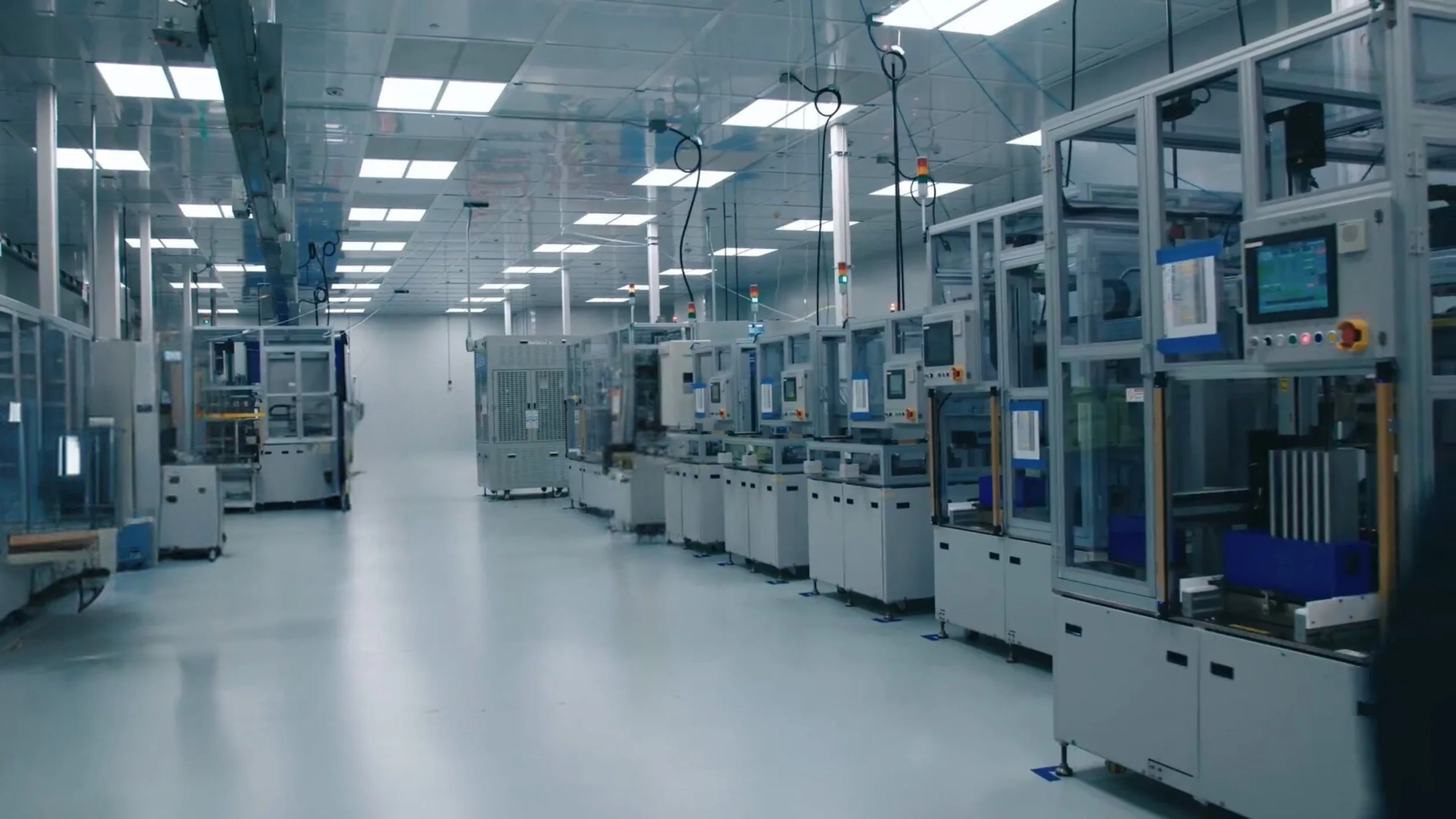
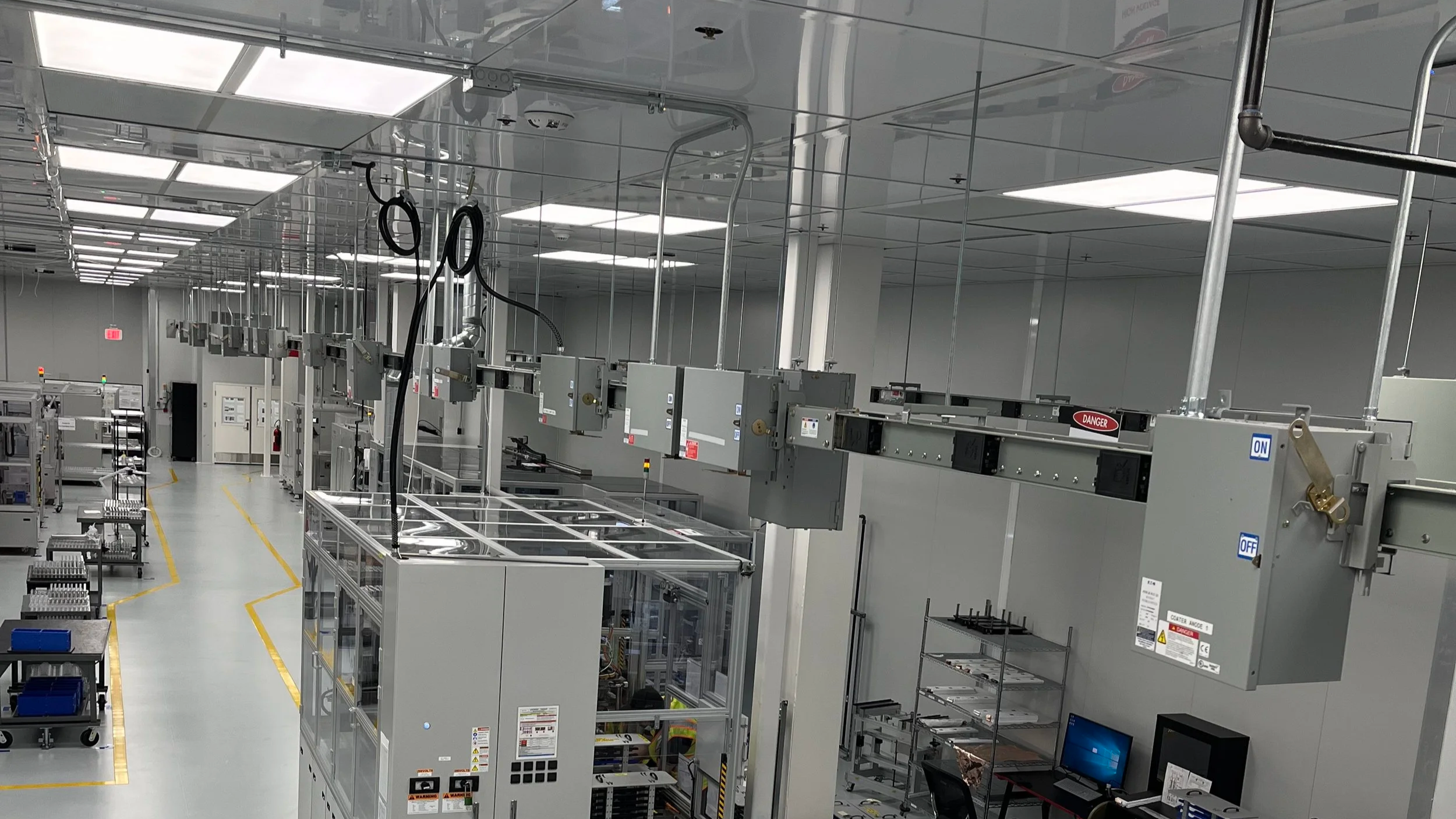
A major energy storage systems manufacturer engaged Airtho to design and deliver a large-scale dry room capable of supporting demanding production requirements. The project required extremely high airflow volumes, significant customization during active construction, and a flexible approach that could adapt to evolving client needs without impacting schedule.
Challenge
The facility required approximately 186,000 CFM of recirculation air—an airflow load that typically demands a large number of fan filter units (FFUs) and substantial electrical consumption. Meanwhile, the client continued to adjust the room layout, wall locations, and access points throughout construction, requiring a responsive engineering and project management approach.
Solution
Airtho deployed its proprietary design methodologies and integrated components to deliver a highly efficient and adaptable system:
Energy-Efficient Airflow Strategy: Using Airtho’s standard plenum-integrated FFU design combined with proprietary HEPA Hub technology, the engineering team reduced the required FFUs from 248 standard units down to just 31 HEPA Hubs.
248 standard FFUs = 104 kW power consumption
31 HEPA Hubs = 60 kW power consumption
This optimization resulted in an estimated annual savings of 385,440 kWh, significantly lowering operating costs for the client.
Rapid Customization in Real Time: Throughout construction, the client requested adjustments—including multiple layout redesigns, added and relocated doors, interior wall shifts, and an increase in total room square footage. Airtho absorbed all changes while keeping the project on schedule.
Flexible, Customer-Driven Execution: During design, construction, and commissioning, Airtho remained responsive and adaptable, ensuring the final environment fully supported the client’s production, operational flow, and long-term scalability.
Results
Dramatically reduced electrical consumption through optimized airflow design
Successful delivery despite ongoing layout changes
Flexible approach that maintained schedule and aligned with customer goals
A high-performance dry room supporting large-scale energy storage system production