
Why Dry Room Infrastructure Should Be Treated as a Core Production Asset
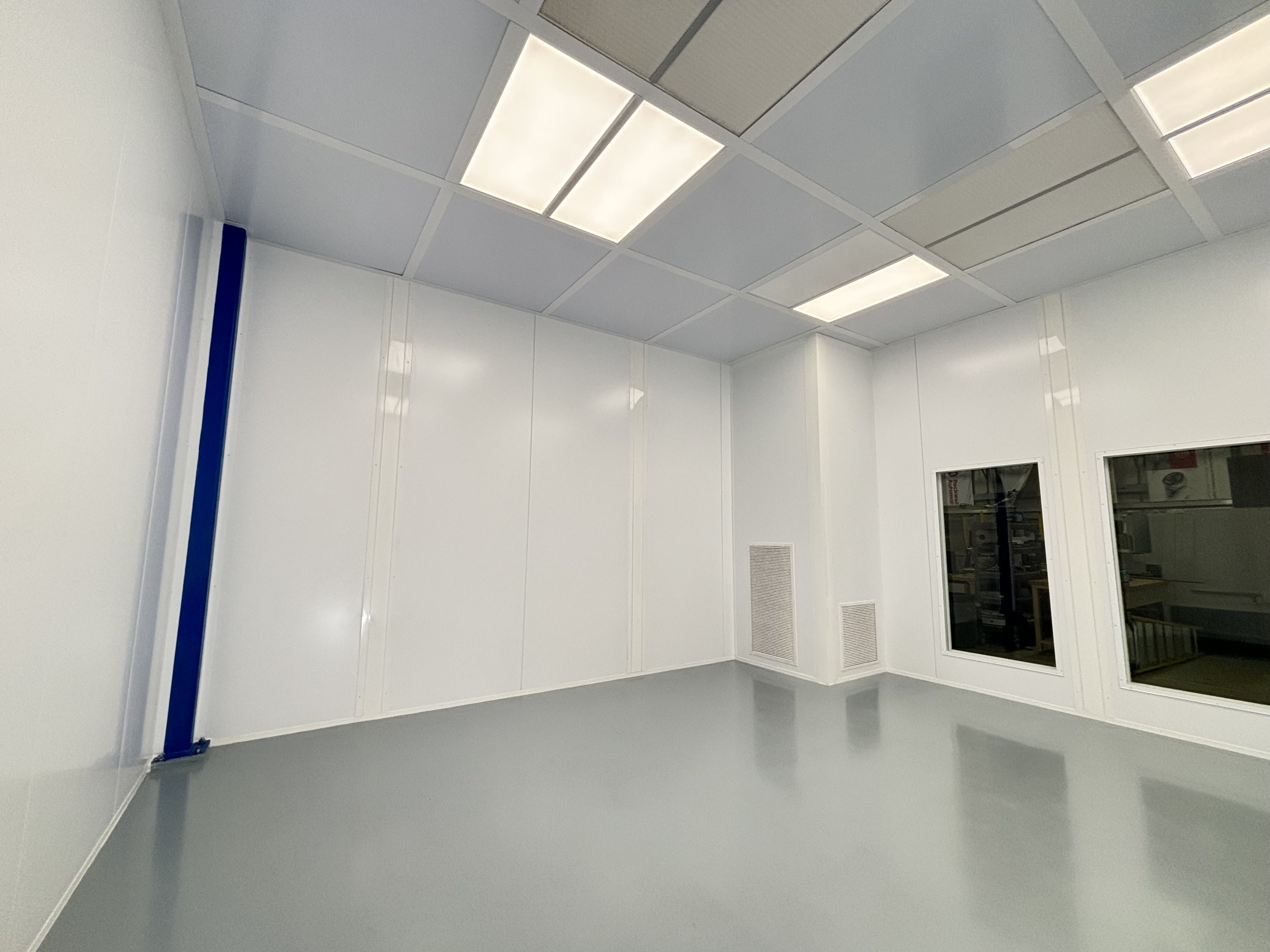
In lithium-ion battery manufacturing, few systems influence product quality, yield, and operational stability as directly as the dry room. Yet dry room infrastructure is still often treated like a supporting utility—planned late, value-engineered aggressively, and judged primarily on upfront cost. That mindset is costly.
Ultra-low dew point environments are not optional accessories in battery production. They are core production assets—as critical to throughput and yield as coating, calendaring, or formation equipment. When dry room systems are under-designed or misunderstood, the consequences show up immediately in higher scrap rates, process instability, and runaway energy costs.
To illustrate why this shift in thinking matters, Airtho evaluated the real-world implications of adding 25,000 CFM of ultra-low dew point dehumidification capacity to a lithium-ion battery facility in Lexington, Kentucky. The analysis makes one thing clear: treating dry rooms as production infrastructure—not utilities—changes how projects are designed, budgeted, and optimized.
Dry Rooms Directly Control Yield, Not Comfort
Battery dry rooms exist for one reason: moisture control at an extreme level.
Trace moisture reacts aggressively with lithium-based materials, degrading cell performance, shortening cycle life, and introducing safety risks. For this reason, modern battery facilities routinely operate at −40 °C room dew points, with even drier supply air to counteract infiltration, personnel loads, and process moisture.
At these conditions, dry room performance is not a background variable—it is a process constraint. If the environment drifts, production suffers. No amount of downstream quality control can compensate for moisture exposure upstream.
This is why leading manufacturers no longer ask, “How much does the dry room cost?”
They ask, “What does it cost if the dry room underperforms?”
What “Production Asset” Thinking Looks Like in Practice
When dry rooms are treated as core production systems, the design priorities shift:
Reliability and stability outweigh minimum first cost
Energy efficiency is evaluated over decades, not quarters
Redundancy and maintainability are planned intentionally
The building envelope becomes part of the system
Controls, sensors, and commissioning receive serious attention
In the Lexington facility scenario, adding 25,000 CFM of ultra-dry air required more than installing a larger dehumidifier. It demanded a system-level approach integrating cooling, heating, airflow, structure, power, and controls into a unified production asset.
The Infrastructure Behind Ultra-Low Dew Point Control
Maintaining −40 °C room dew points with −70 °C supply air pushes HVAC systems to the edge of what is physically and economically feasible. Achieving this reliably requires two-stage dehumidification:
Chilled-water cooling coils remove the bulk moisture load
A desiccant rotor adsorbs remaining water vapor to reach ultra-low dew points
Electric regeneration heat drives moisture off the rotor
Reheat or post-cooling stabilizes supply air temperature
But the air-handling unit is only the visible tip of the system.
Supporting infrastructure includes:
Expanded chiller capacity
High-capacity electrical distribution
Large-scale insulated ductwork
Vapor-tight piping and condensate systems
Structural support for heavy equipment
Tight building envelopes to control infiltration
Each of these elements plays a role in whether the dry room behaves like a precision production tool or an unpredictable energy sink.
The Cost Conversation Changes When Yield Is the Metric
From a utility mindset, the dry room is judged by its capital cost.
From a production mindset, it is judged by:
Yield protection
Process uptime
Energy intensity per unit of product
Stability across seasons
Ability to scale with production demand
In the Lexington analysis, the added capacity represents millions of dollars in capital investment and hundreds of thousands of dollars per year in energy consumption. On paper, that looks expensive.
In practice, the cost must be compared against:
The value of uninterrupted production
Avoided scrap and rework
Reduced risk of safety incidents
Long-term operational efficiency
Over a 10-year horizon, energy costs alone can rival the initial capital expense—making early efficiency decisions far more impactful than marginal equipment savings.
Energy Use Is a Design Outcome, Not an Inevitable Penalty
Dry rooms are energy-intensive, but they are not energy-inefficient by default.
Much of the lifetime energy burden is determined at the design stage:
Fresh air percentages
Envelope leakage rates
Heat recovery strategies
Control logic and sensor accuracy
Equipment selection and integration
In battery facilities, dry rooms often consume over half of total site energy. Treating them as production assets unlocks optimization strategies that can reduce energy consumption dramatically—sometimes by 30–40% or more compared to baseline designs.
These savings compound year after year.
Reliability and Maintenance Are Production Risk Factors
A dry room outage is not an inconvenience—it is a production event.
Ultra-low dew point systems require disciplined maintenance:
Filter management
Sensor calibration
Rotor inspection and lifecycle planning
Coil cleaning and drainage management
Because humidity recovery time can be slow, even short outages can disrupt production schedules. Facilities that recognize dry rooms as production assets invest accordingly in commissioning, staff training, and service strategies that minimize risk.
Regional Context Matters—but Strategy Matters More
Lexington’s humid summers increase moisture loads, while Kentucky’s relatively low industrial electricity rates soften operating costs. Local permitting and code compliance are straightforward for industrial HVAC systems, provided designs are properly documented and engineered.
But regional factors don’t change the central truth: the dry room defines the operating envelope of the factory.
Climate, utility rates, and codes influence execution but they don’t change the need for robust, well-integrated infrastructure.
The Takeaway: Dry Rooms Are Not Overhead
Dry room infrastructure enables:
Product quality
Process stability
Manufacturing scale
Long-term cost control
Treating it as a supporting utility invites risk, inefficiency, and reactive spending. Treating it as a core production asset leads to smarter design, better energy performance, and more resilient operations.
The question isn’t whether dry rooms are expensive.
The question is whether they are designed to deliver value over the full life of the facility.